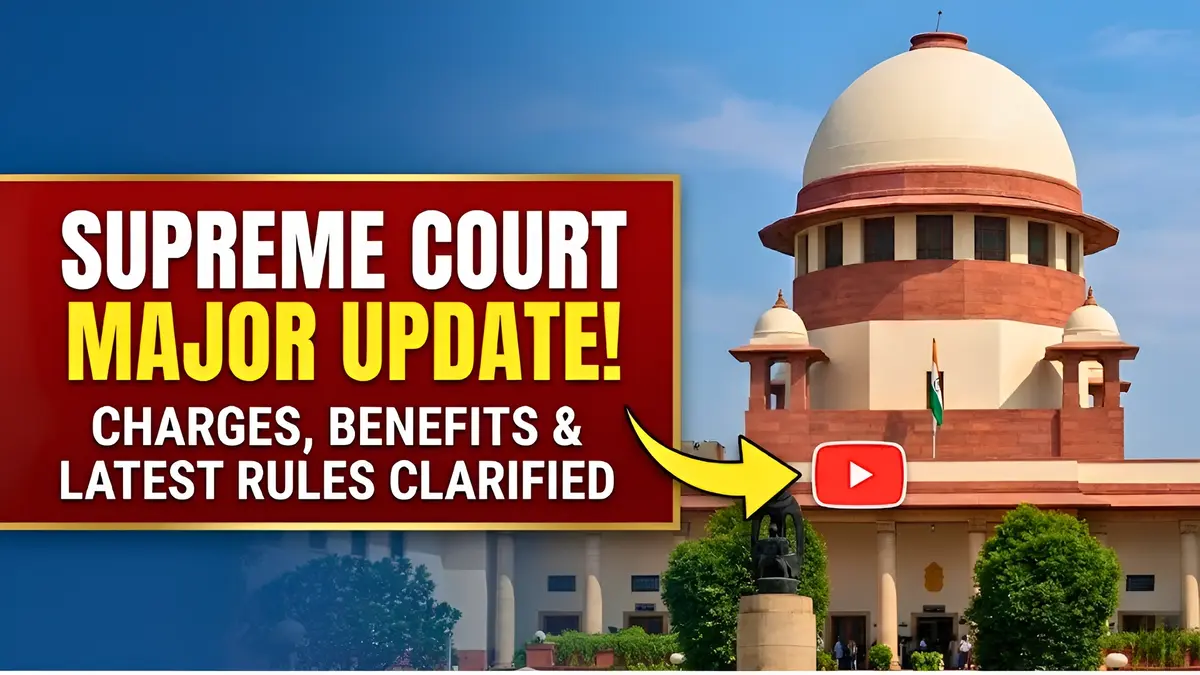
Supreme Court Clarifies: If you have been living in a rented house for years and quietly believed that time alone could turn you into the owner, the Supreme Court has delivered a clear and final message. In a recent clarification, the top court stated that simply staying in a rented property for 12 years or more does not give any ownership rights. This ruling brings relief to landlords and clears confusion among tenants who misunderstood long-term possession laws.
Supreme Court Clear Stand
The Supreme Court made it very clear that tenancy and ownership are two completely different legal concepts. Even if a tenant stays in a rented property for decades, ownership does not shift automatically. The court observed that rent-based possession is always permissive, not hostile. This means the tenant acknowledges the owner’s rights. Such possession can never become ownership, no matter how long the stay continues.
Meaning of Long Possession
Many people assume that long possession itself is enough to claim ownership. The Supreme Court rejected this belief outright. The judges explained that long possession only matters when it is hostile, open, and against the owner’s consent. A tenant stays with permission, pays rent, and recognizes the landlord. Because of this relationship, the law does not treat long-term renting as a path to ownership.
Adverse Possession Explained
Adverse possession is often misunderstood. The Supreme Court clarified that it applies only when someone occupies land openly, continuously, and without the owner’s permission for a legally defined period. Renting fails this test completely. A tenant cannot claim adverse possession because rent agreements themselves confirm the owner’s title. The court stressed that adverse possession is an exception, not a shortcut for tenants.
Tenant Rights Remain Protected
While rejecting ownership claims, the Supreme Court also emphasized that tenant rights remain protected under law. A landlord cannot evict a tenant arbitrarily or without following due legal process. Rent control laws and tenancy regulations still apply. This judgment does not weaken tenant protections but ensures that legal boundaries between tenant rights and ownership rights are respected and clearly understood.
Landlords Get Legal Relief
This clarification offers major relief to property owners who feared losing ownership due to prolonged tenancy. The court acknowledged growing misuse of adverse possession claims by tenants. By drawing a firm line, the judgment protects lawful owners from losing property unfairly. Landlords can now feel more secure knowing that time alone cannot erase their ownership rights.
Impact on Property Disputes
The ruling is expected to reduce unnecessary property litigation across India. Many disputes were based on the false belief that staying for 12 years creates ownership rights. The Supreme Court’s clear interpretation will discourage such claims. Lawyers believe this decision will streamline property cases and prevent tenants from misusing legal loopholes to challenge rightful owners.
What Tenants Should Know
Tenants should understand that rent agreements are purely contractual. Paying rent, renewing agreements, or staying for long periods does not change ownership status. If tenants wish to purchase property, it must be done through legal sale deeds and registration. The Supreme Court’s ruling serves as a reminder to rely on lawful transactions, not assumptions based on duration of stay.
Legal Clarity for Everyone
Legal experts say this judgment brings long-needed clarity. It aligns with earlier rulings but removes lingering doubts. Both landlords and tenants now have a clearer understanding of their rights and limitations. The decision strengthens property laws and reinforces the importance of written agreements, lawful ownership documents, and transparent legal conduct.
Final Word: Supreme Court Clarifies
The Supreme Court’s message is loud and clear: renting for 12 years, or even longer, does not make anyone a property owner. Ownership can only be acquired through legal transfer, not through time spent as a tenant. This ruling protects genuine owners, prevents misuse of adverse possession laws, and restores balance in property rights. For anyone dealing with rented property, the law now